

CANDIDE
Music: Leonard BernsteinLibretto: "Hugh Wheeler po motivih Voltairovega romana; nova verzija: John Caird"
Co-production: Academy of Music, University of Ljubljana (AG), Slovenian Chamber Music Theatre (SKGG), Cankarjev dom Ljubljana (CD)Première: Cankarjev dom Ljubljana, June 10, 2021

Director: Eva Hribernik
Conductor: Simon Dvoršak
Set designer: Jaro Ješe
Costume designer: Saša Krhen
Choreographer: Maša Vajda Andrejka
Libretto translator: Maja Lupša
Répétiteurs: Ivan Vombergar, Jakob Barbo
Producers: Katja Konvalinka (SKGG), Staša Mihelčič (CD), Matjaž Drevenšek (AG)
Photographer: Darja Štravs Tisu
From the directing concept:
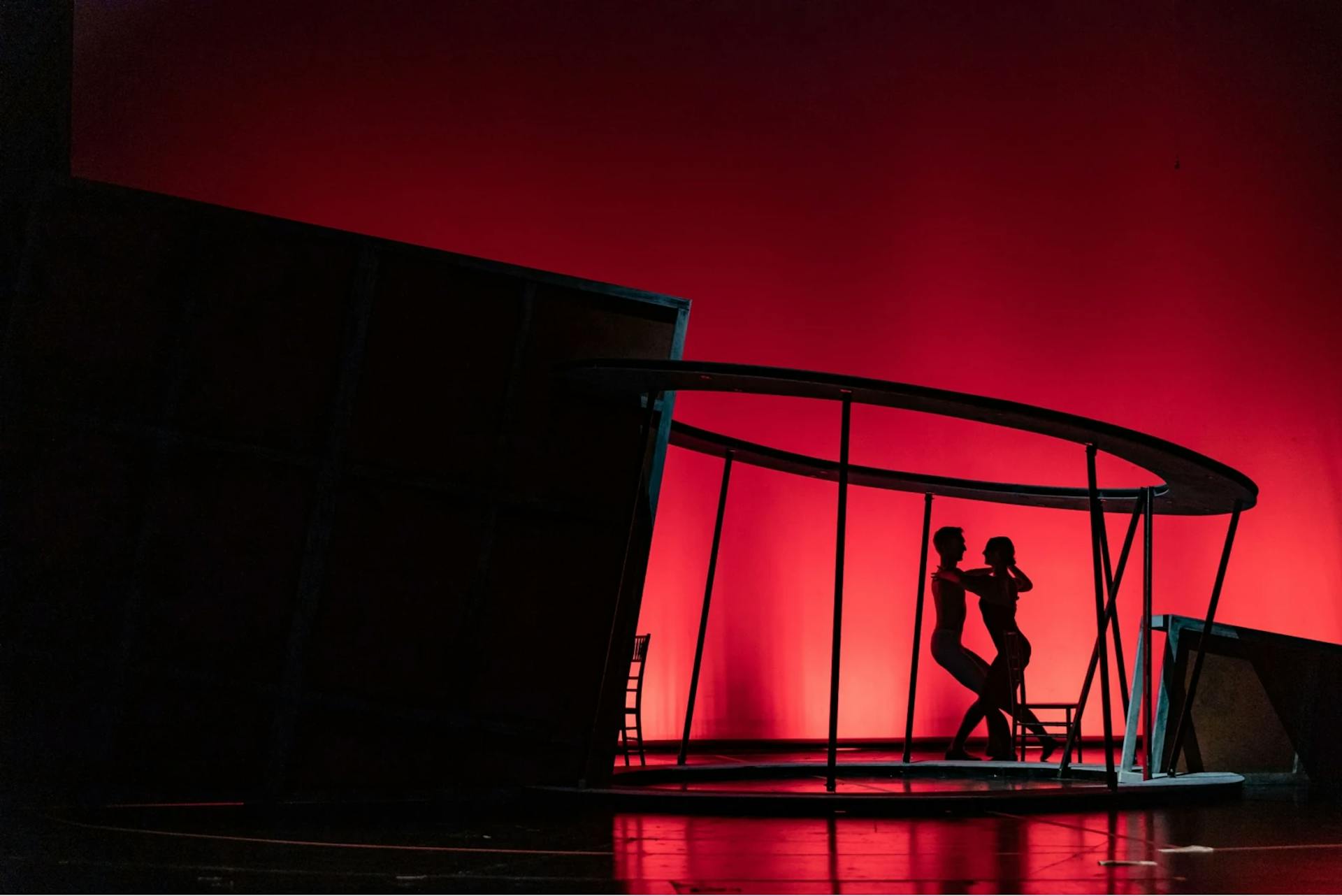
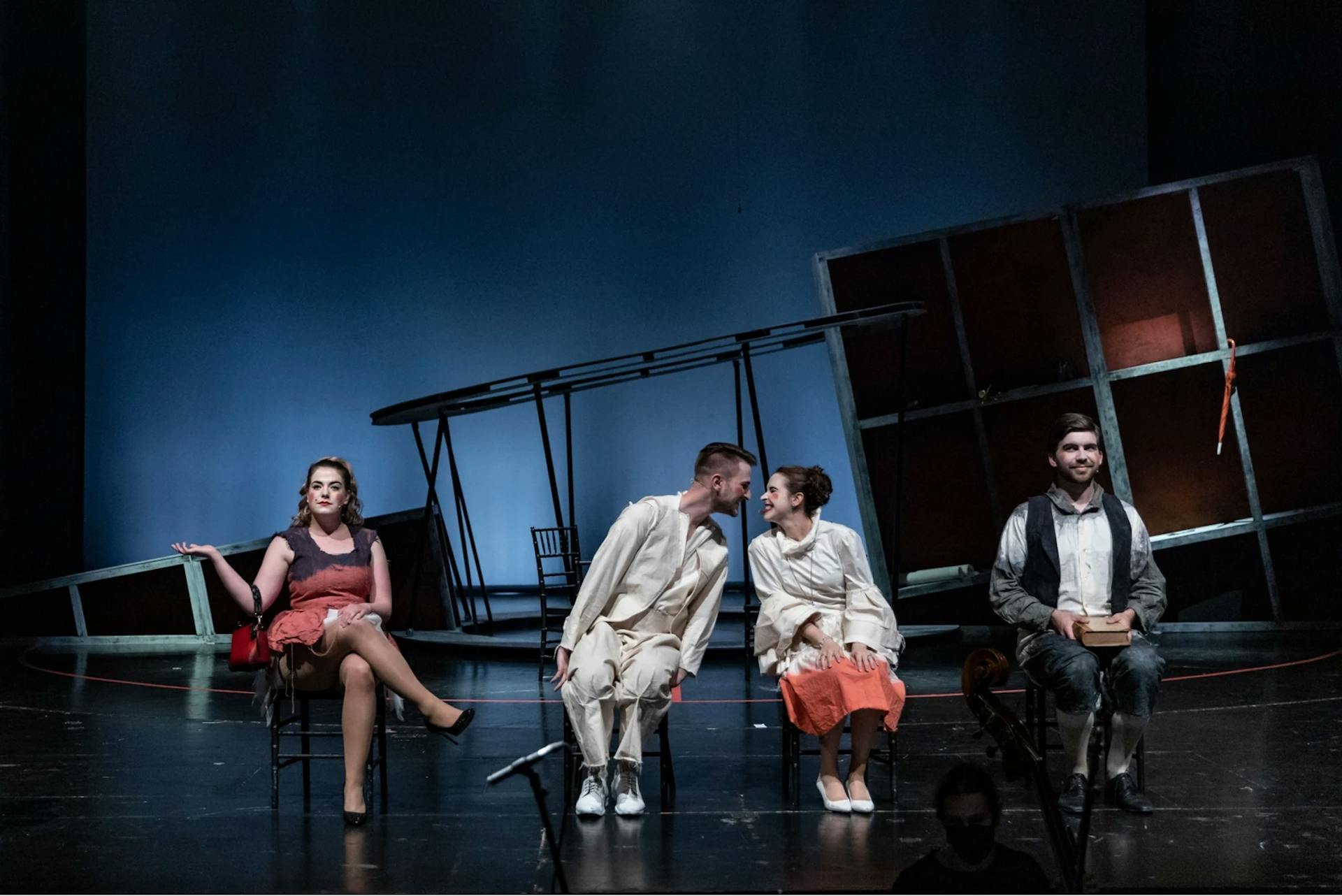
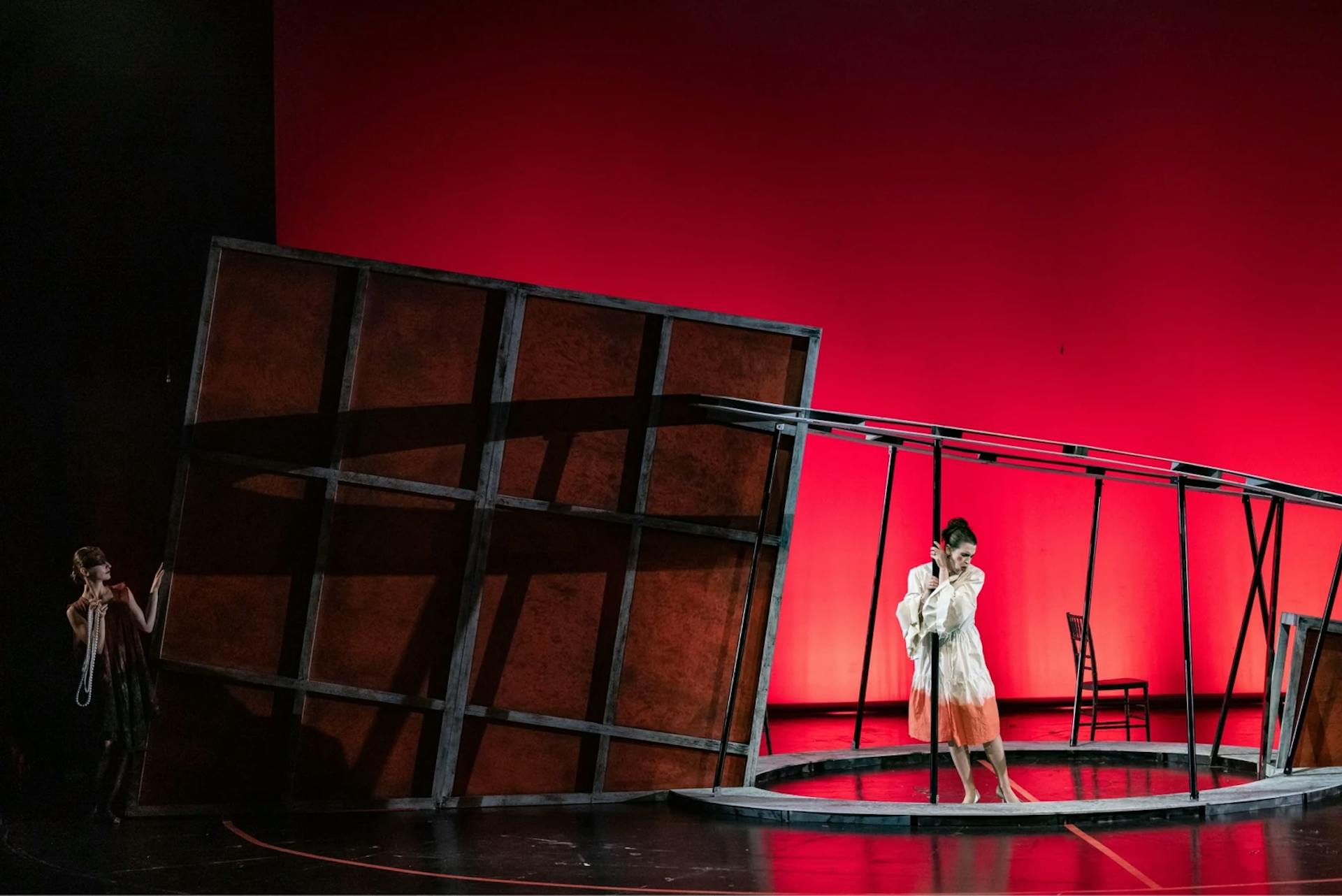
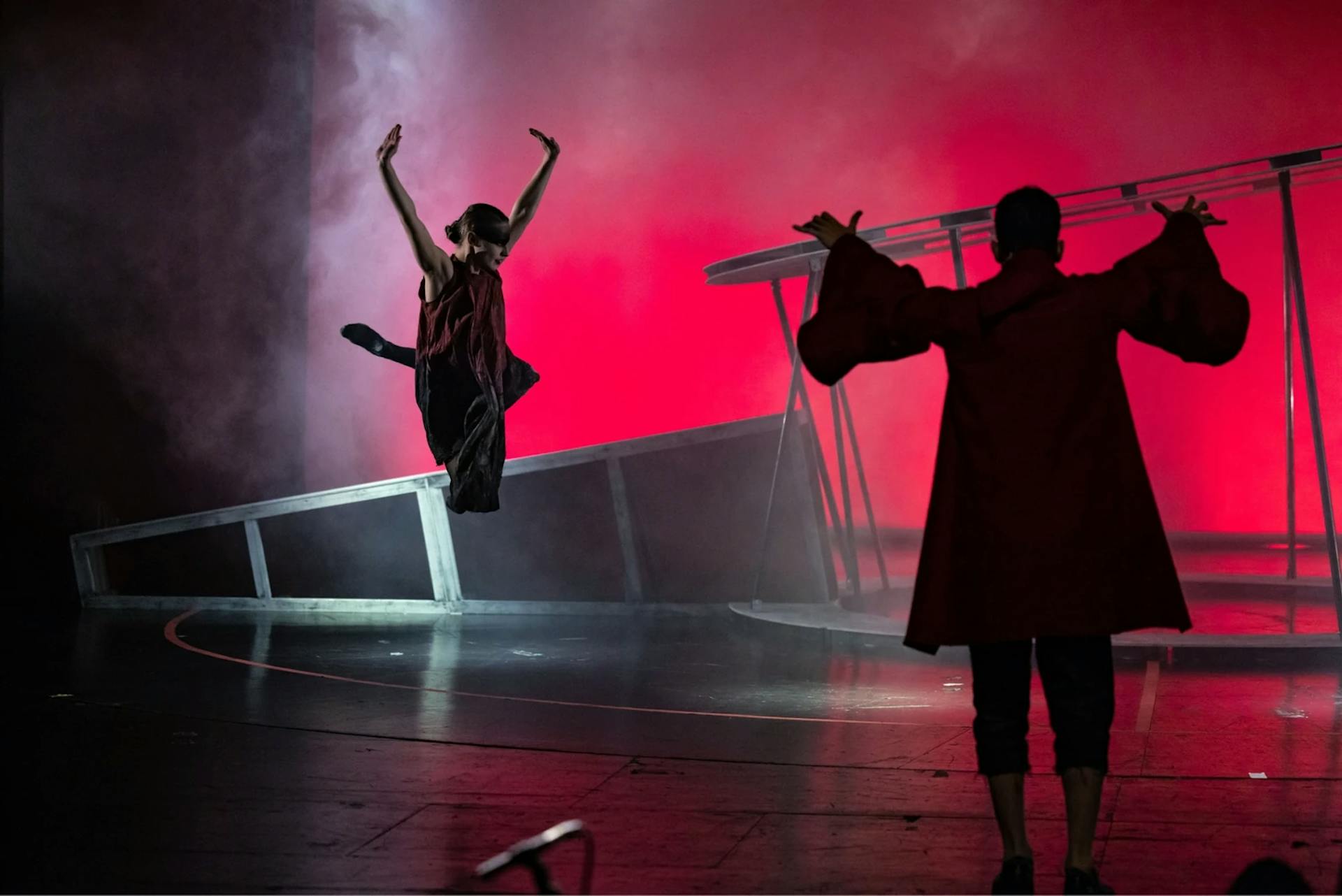
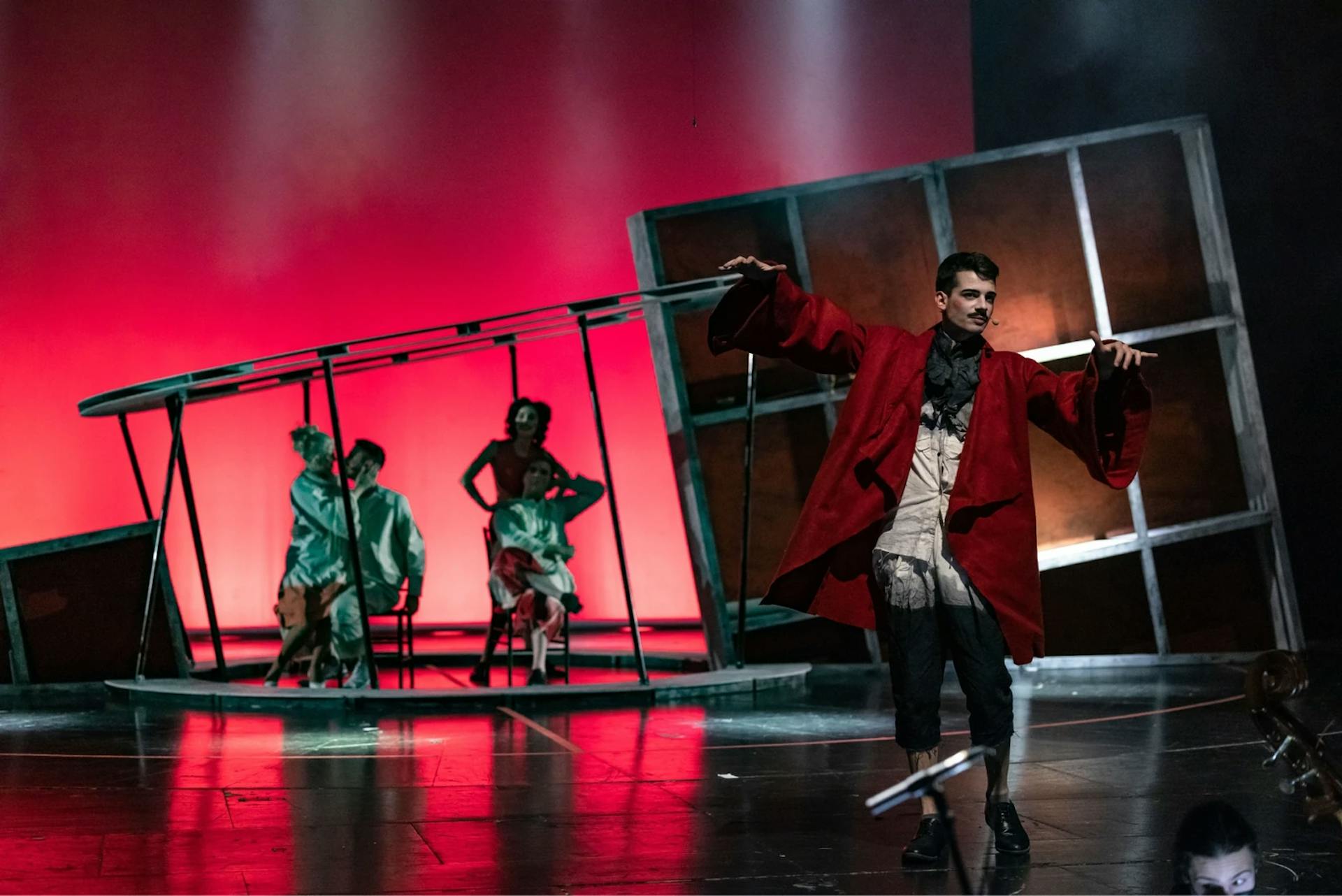
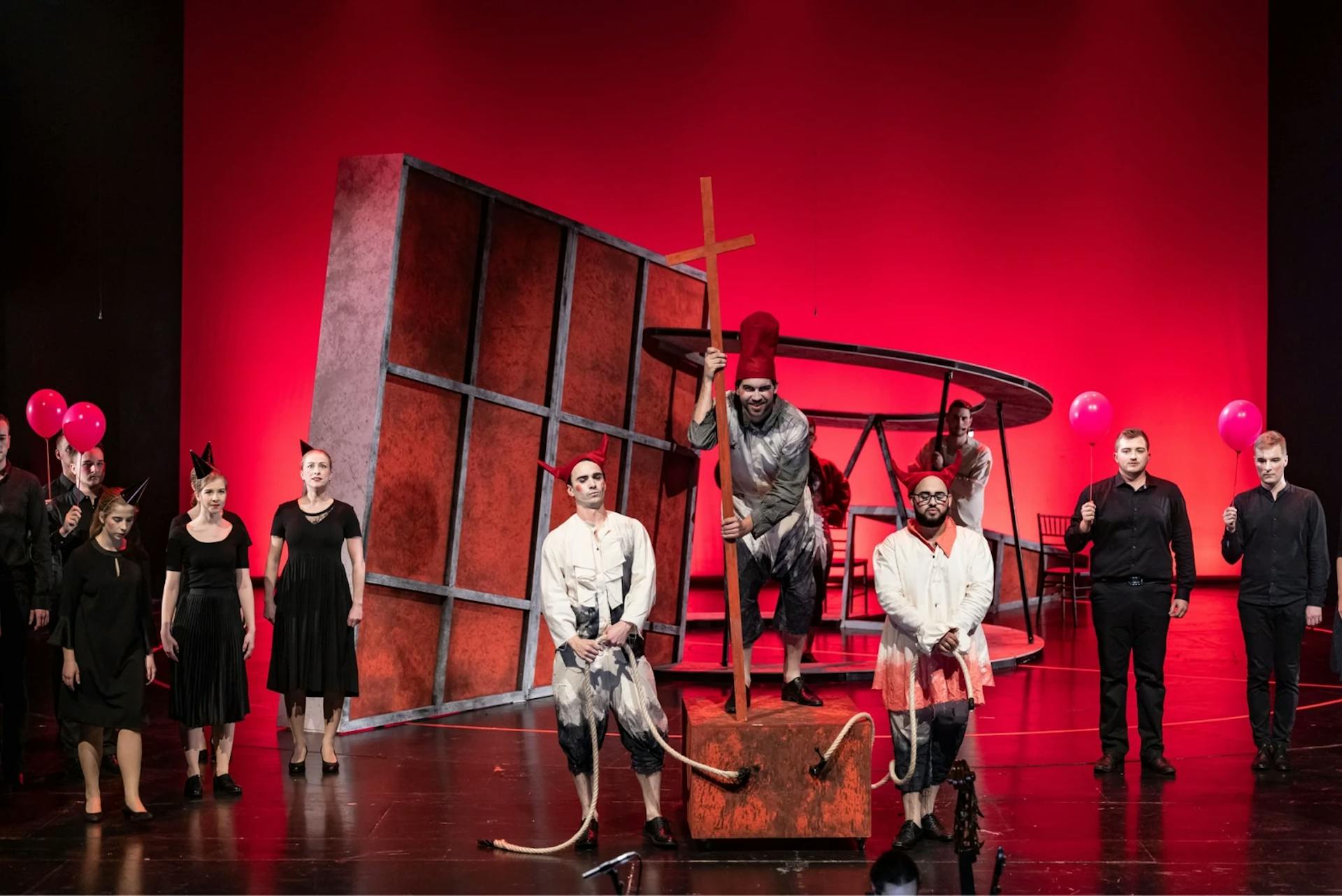
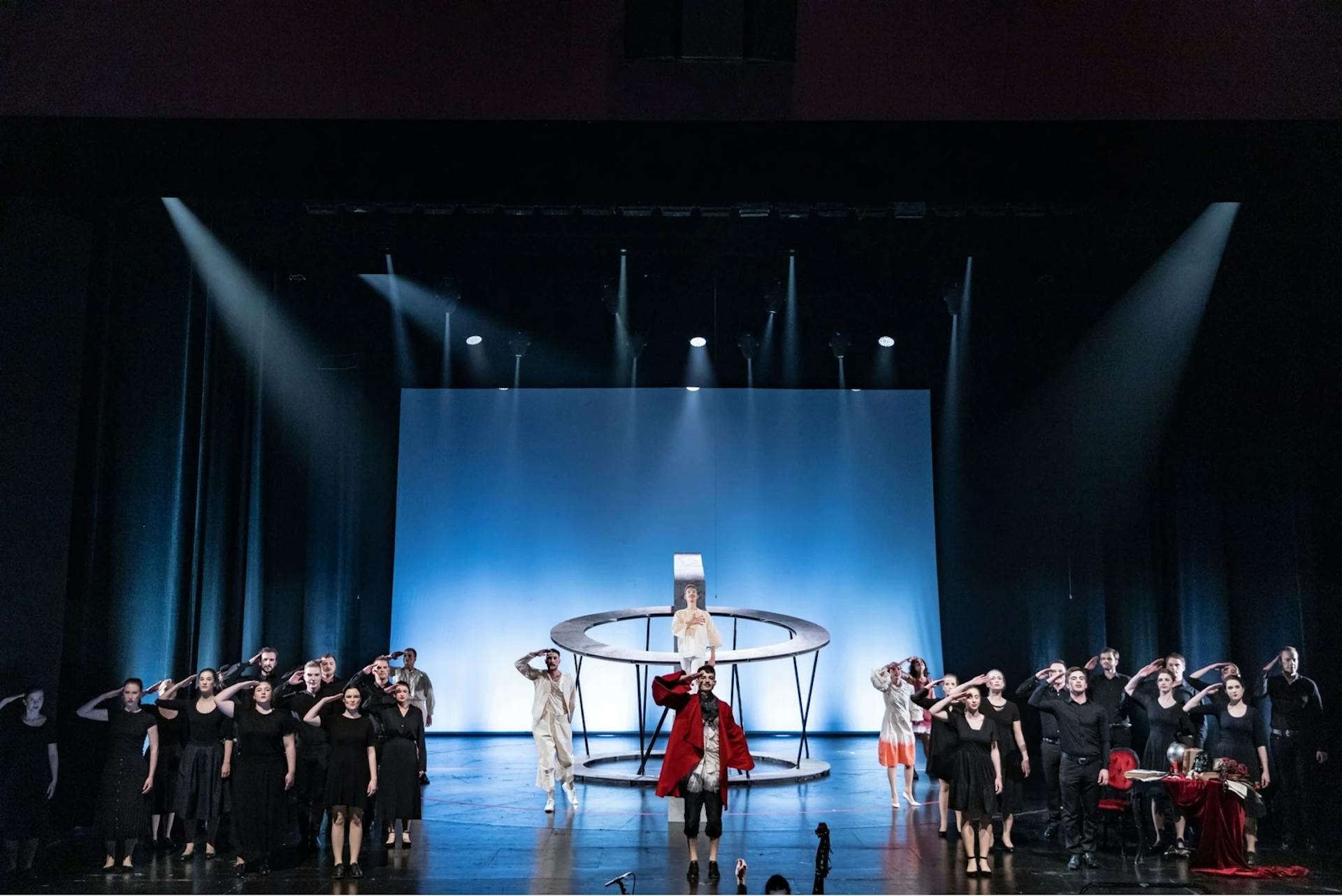
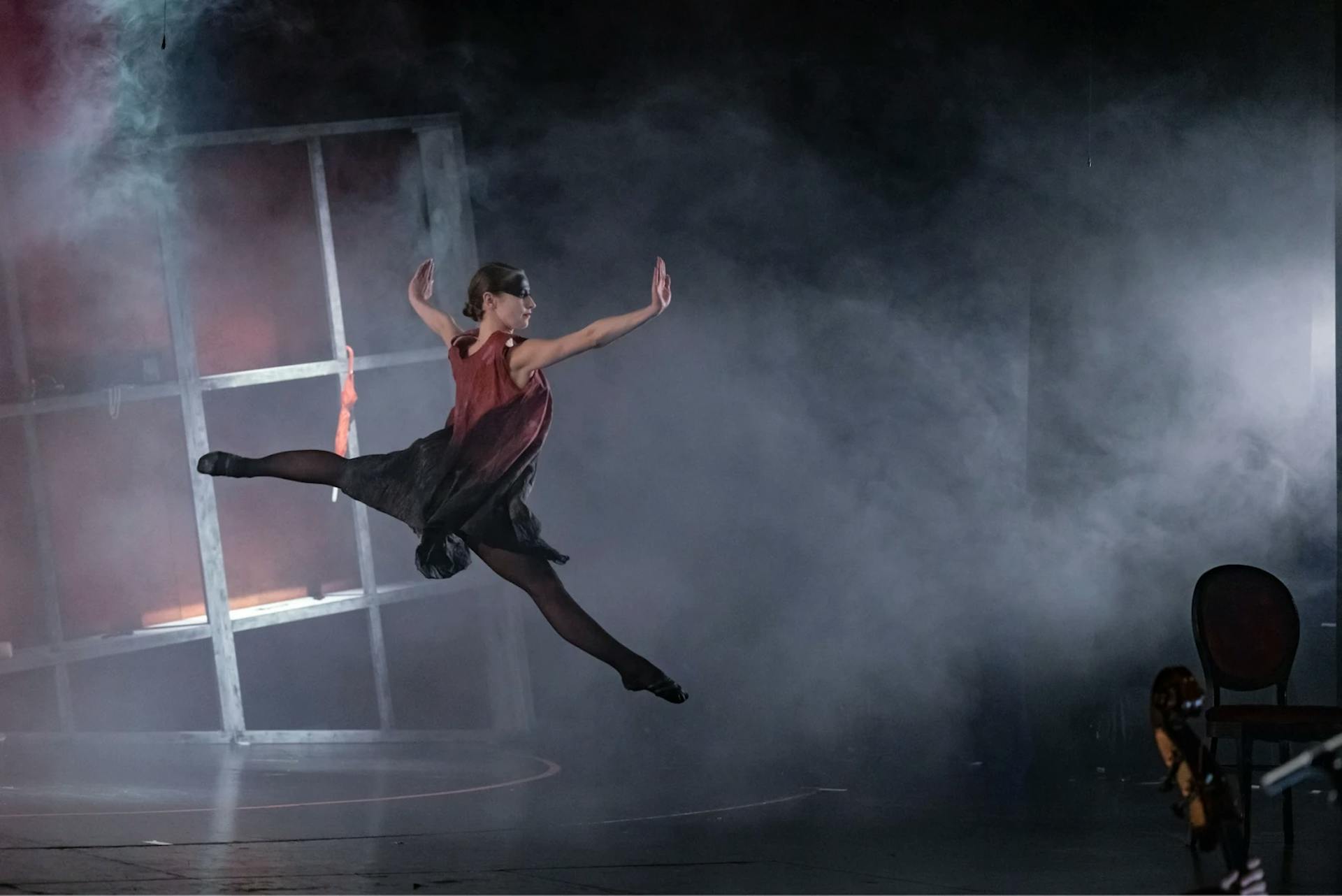
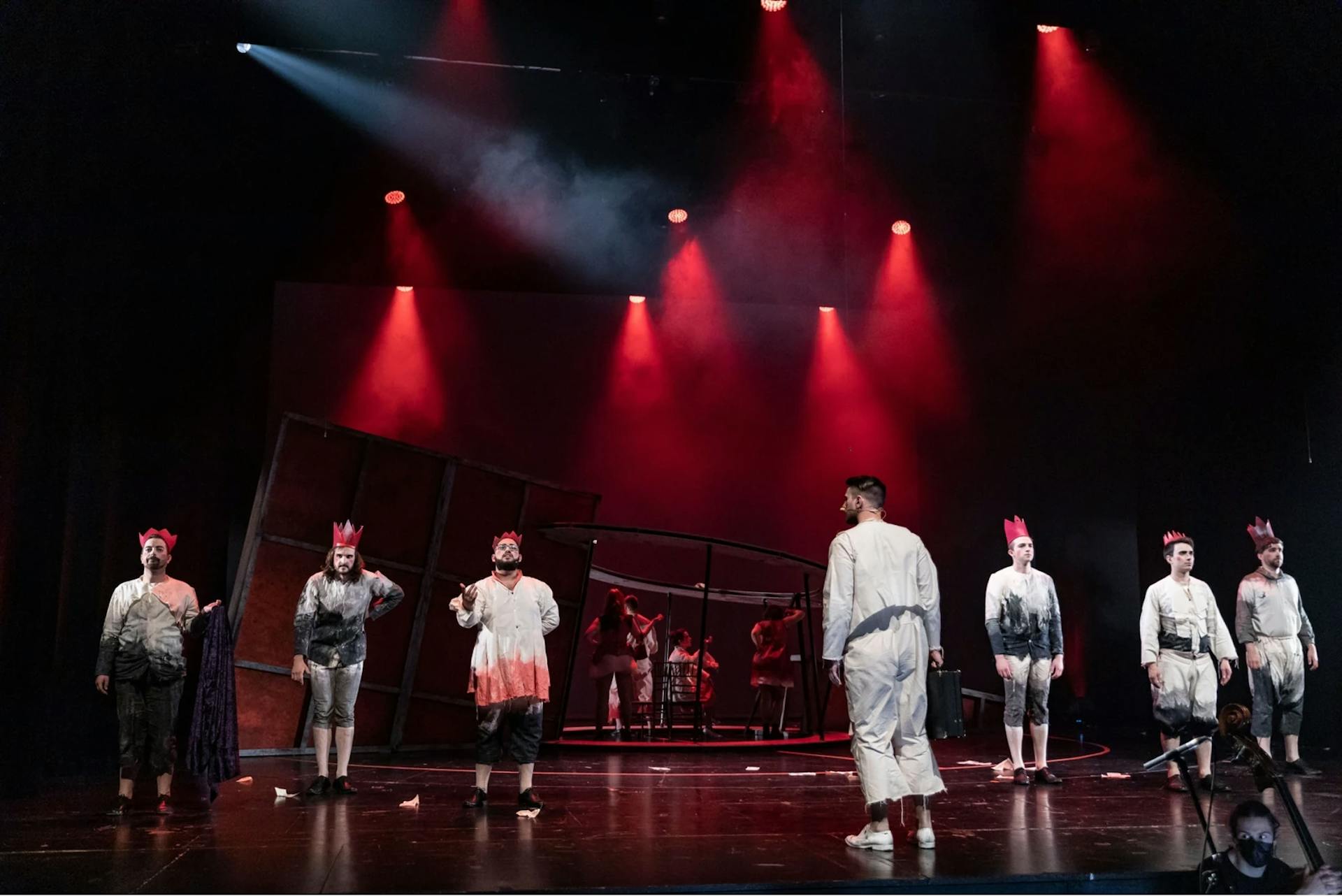
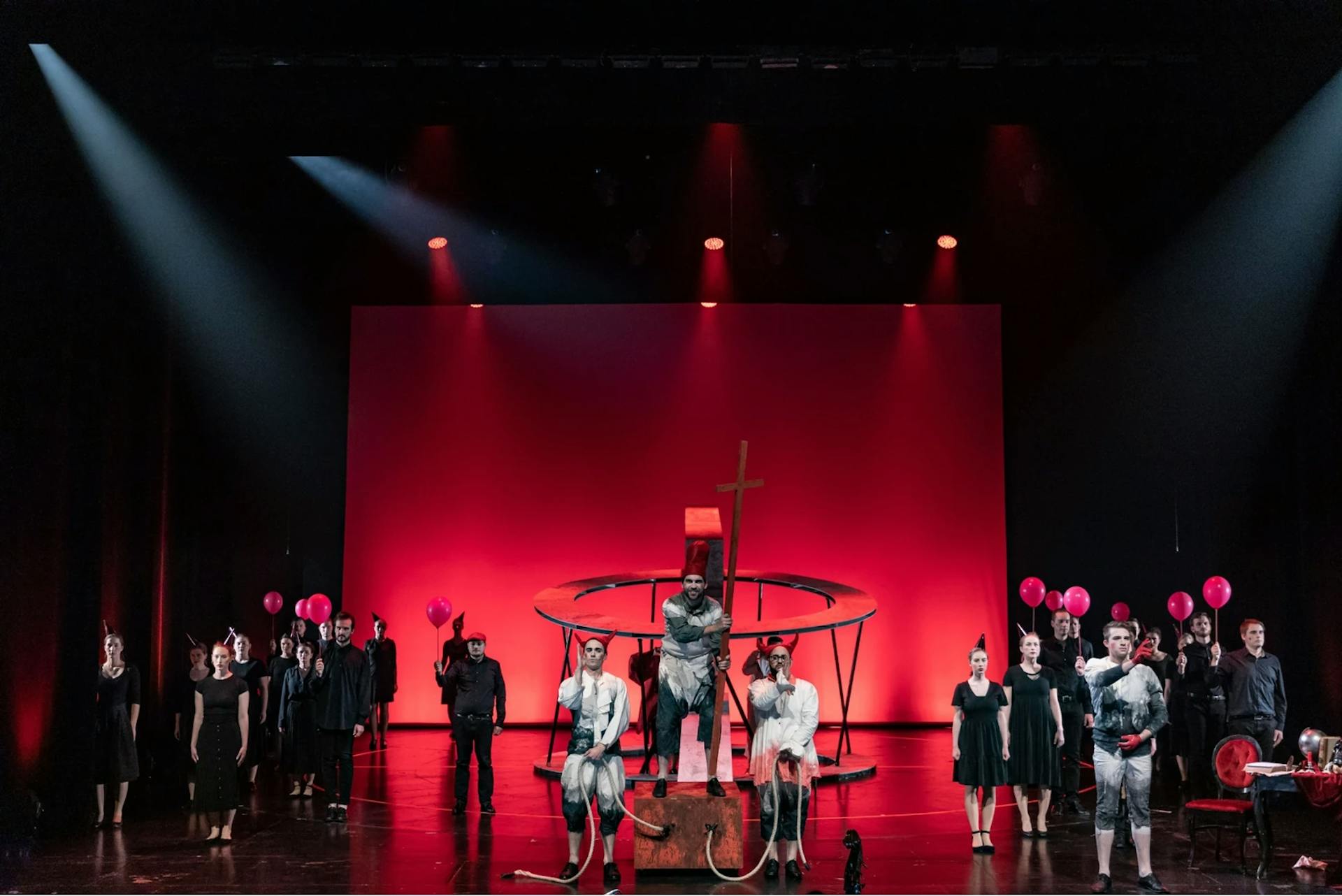
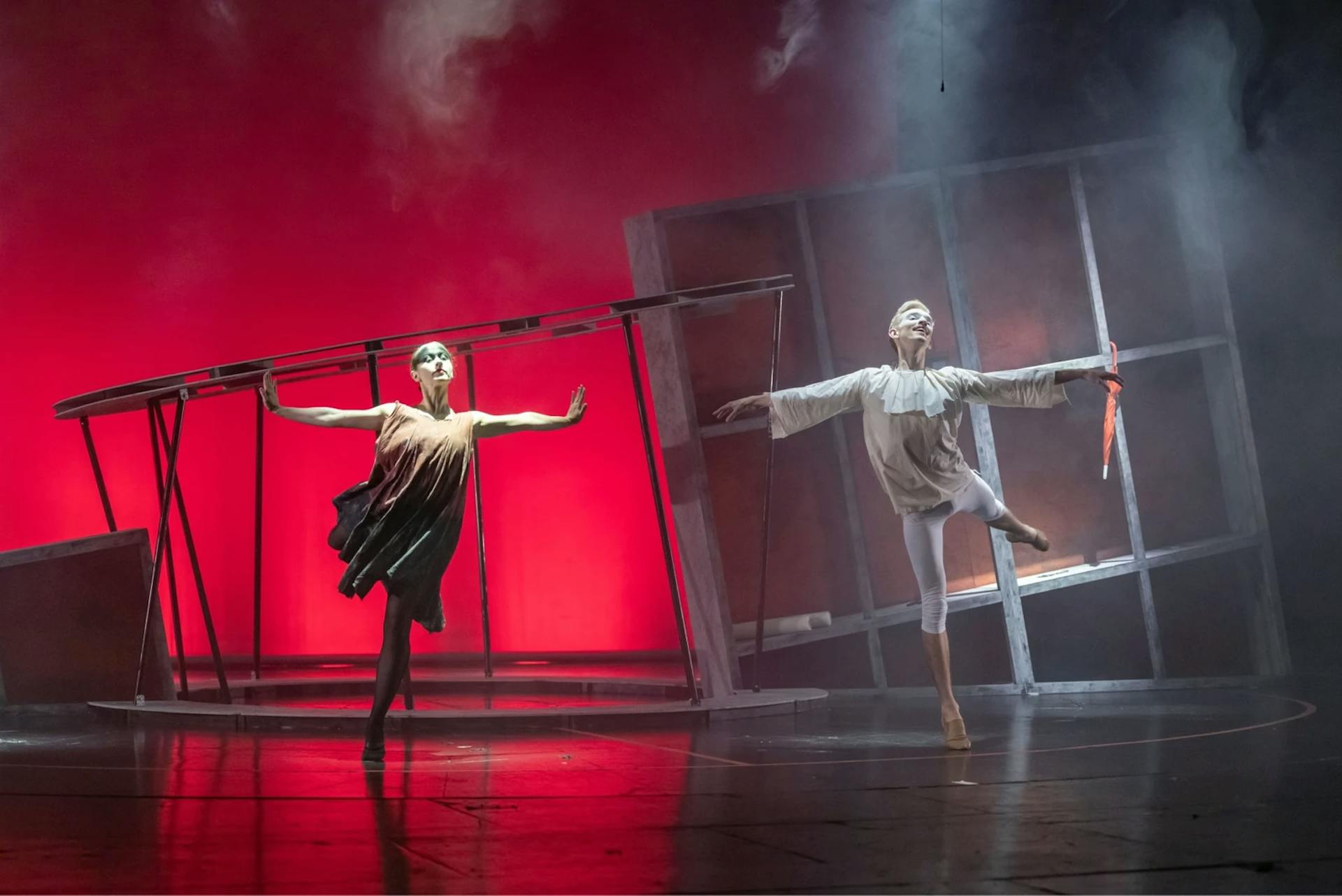
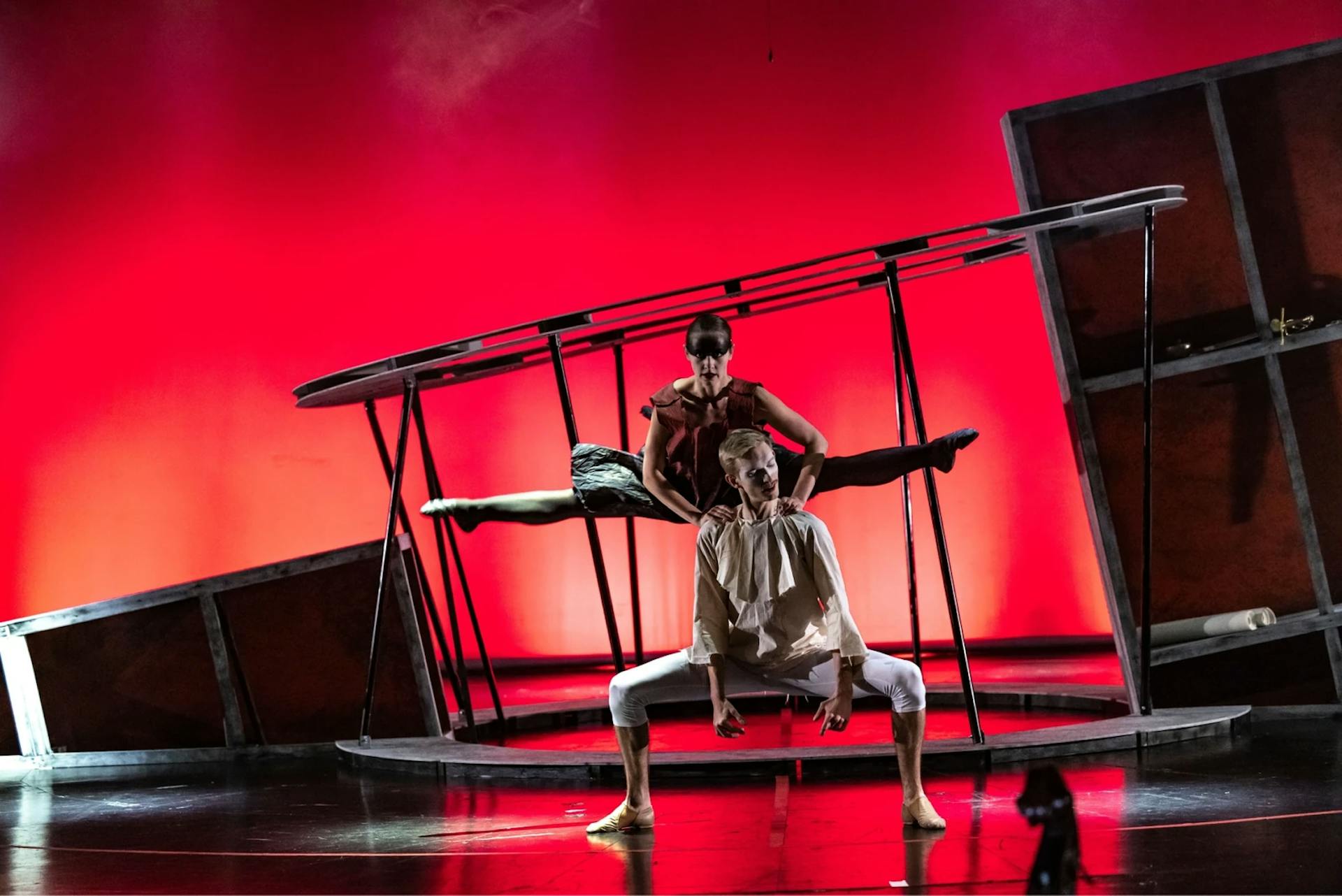
"Voltaire, in our production, embodies a man who thinks he holds all the "threads" of life. He takes the place of the puppeteer, the leader of the show, and creates his own theatre – the theatre of life. He creates good (the white dancer), he creates evil (the black dancer), he creates his own puppets (all the characters of the operetta) through which he can test his theories during the performance. Each of the puppets has its own role and function within Voltaire's theatre. Since the puppets are archetypal in nature, the spectator can easily recognise and identify with them. Candide's journey is a process of human individualisation. The individual is confronted with their shadow, the defence mechanisms that allow them to be safe and protected. At a certain stage, defence mechanisms are no longer necessary, as they take away individual's power and hinder their personal development. At that point, the individual steps out of the role of the "puppet" and realises their potential."
From the review:
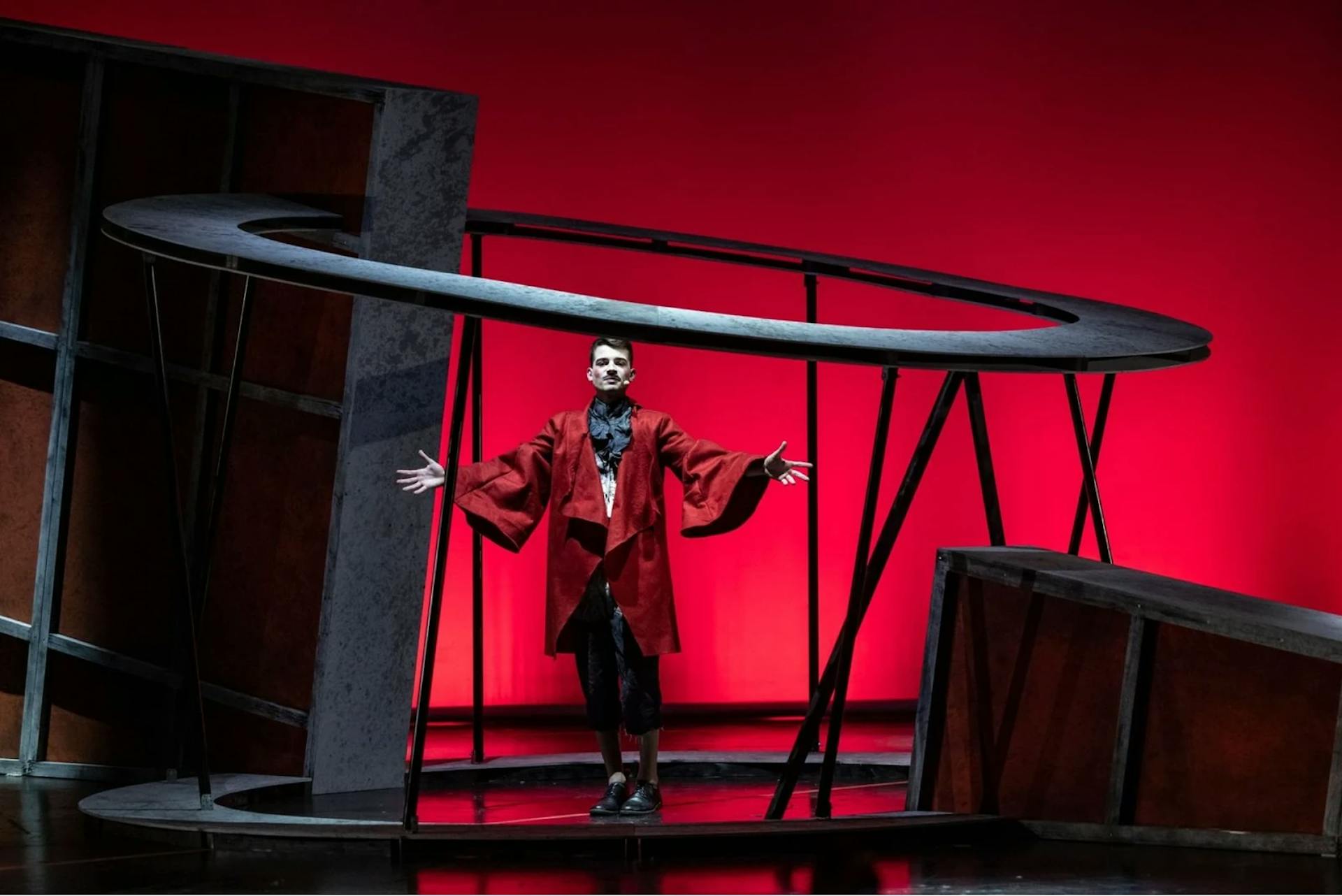
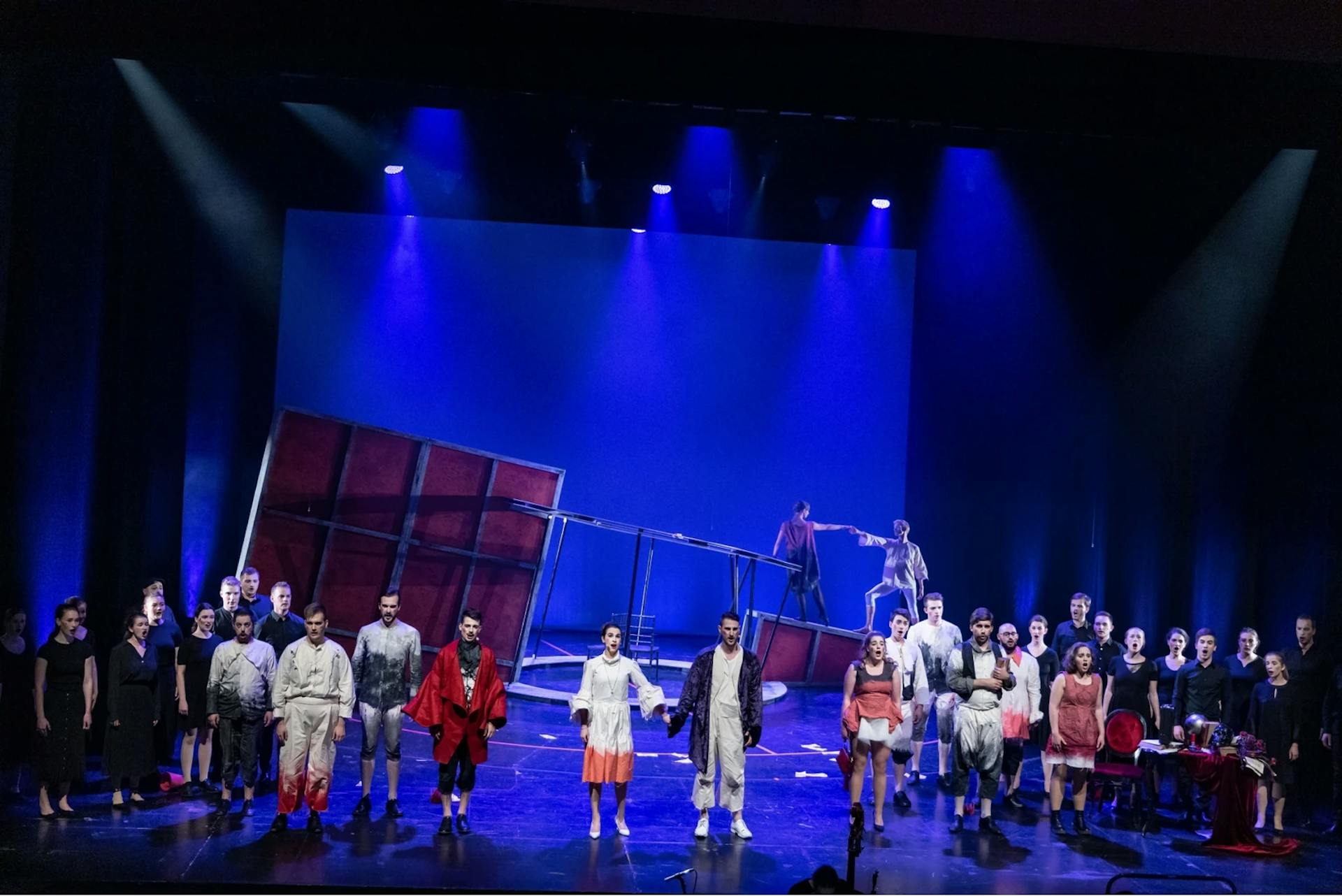
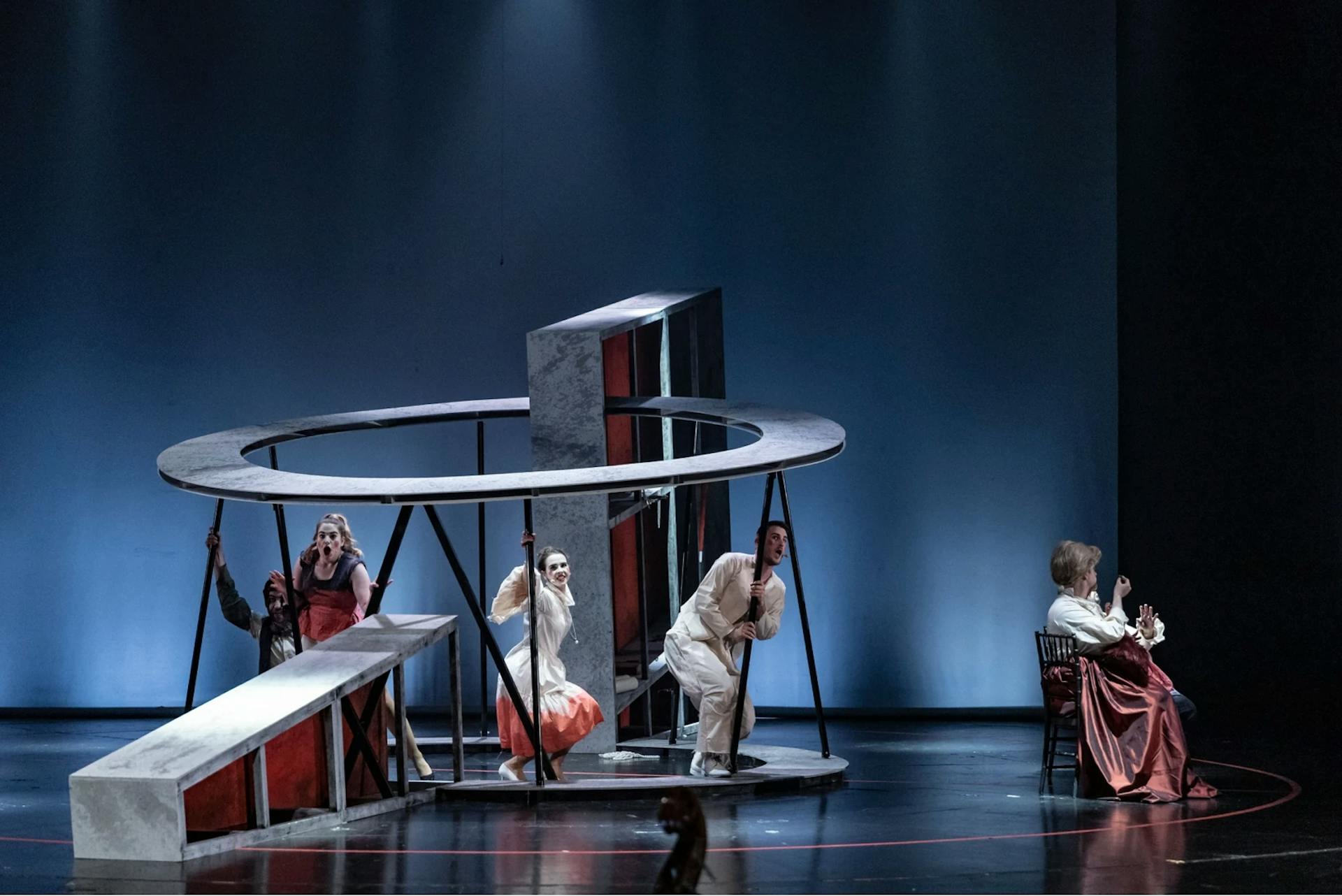
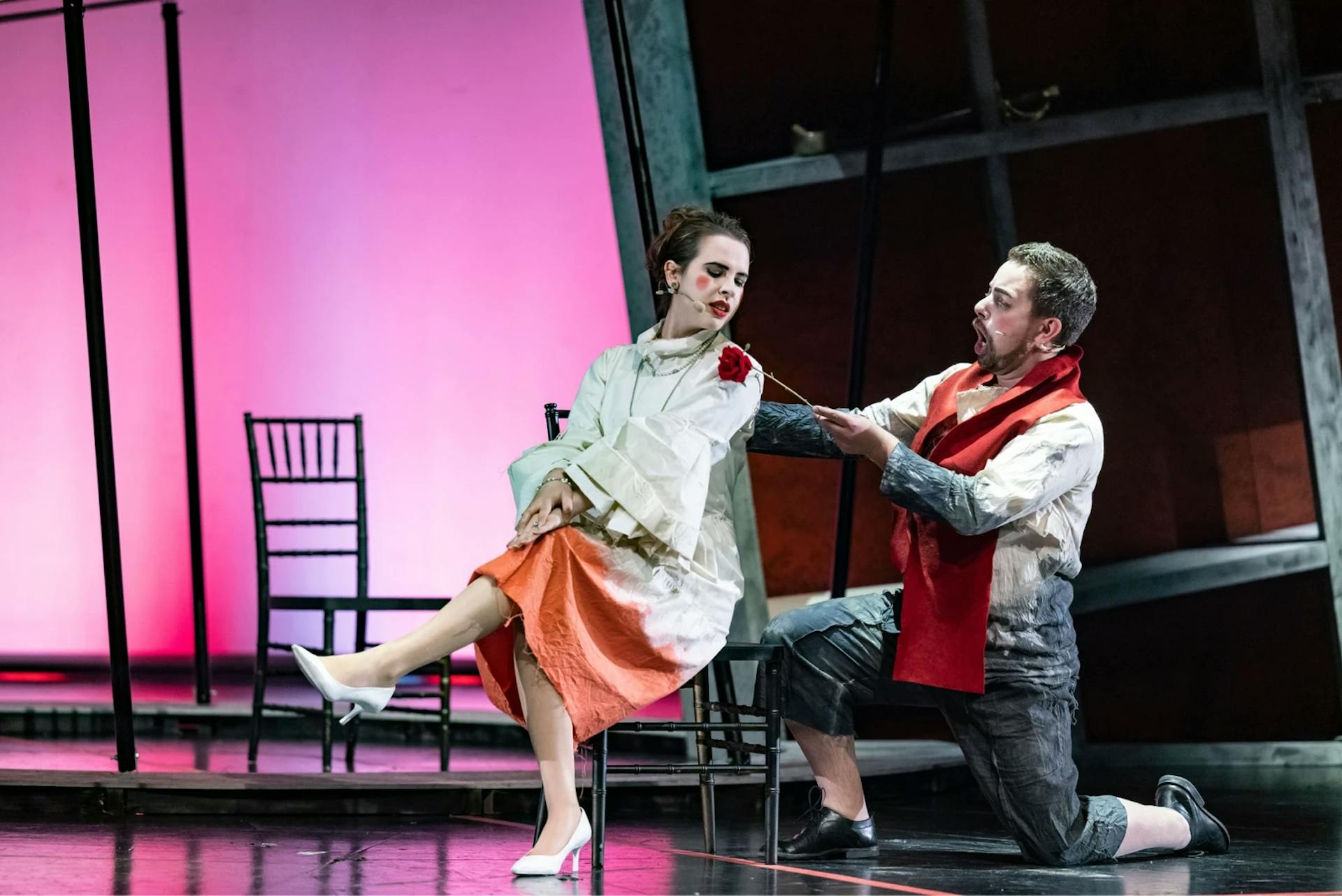
"The operetta is based on the melodicism and scoring of a musical, but at times it grows into the virtuosity and thematic weight of an opera. The director Eva Hribernik has dealt well with the genre disparity. She has kept the work's long-winded and extremely branched, sometimes eclectic, conception in its original "traditional" form, but has nevertheless found practical and concrete solutions to its problems. The stage layout of the performers followed a logic and spoke directly to us with the illustrative symbolism of the colour shades of the costume design and the moving circular structure that served as a salon, a nave, a garden or a manor house. Witty ideas ran the gamut, from the murders, which were carried out in comic ways, to the inclusion of the orchestra in the onstage action. This production enriches the opera stage with another musical work of great substance and performance." (Maia Juvanc, SIGIC, 25 June 2021)