

The god particle
Music: Pavel MihelčičLibretto: Milan Dekleva
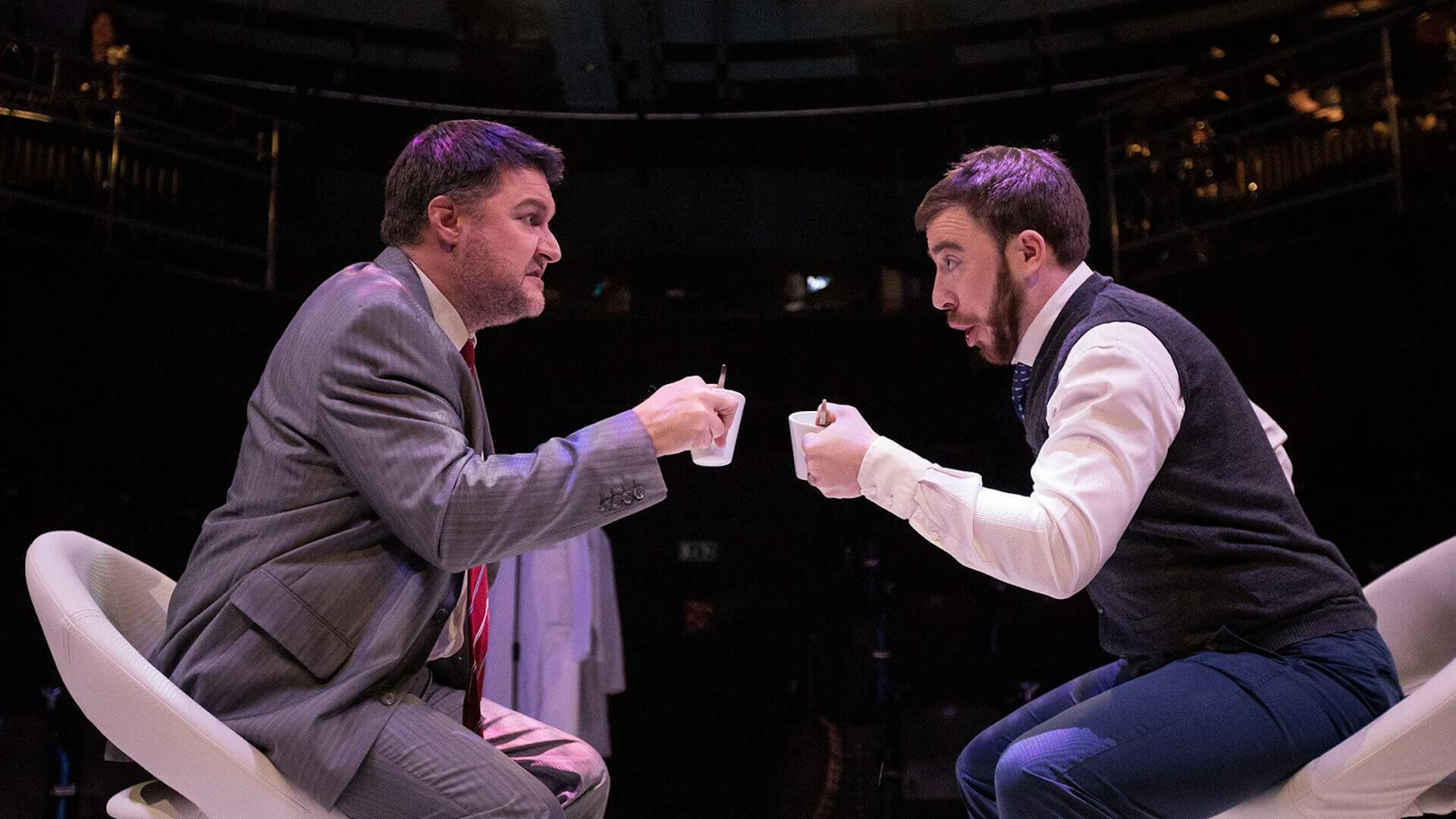
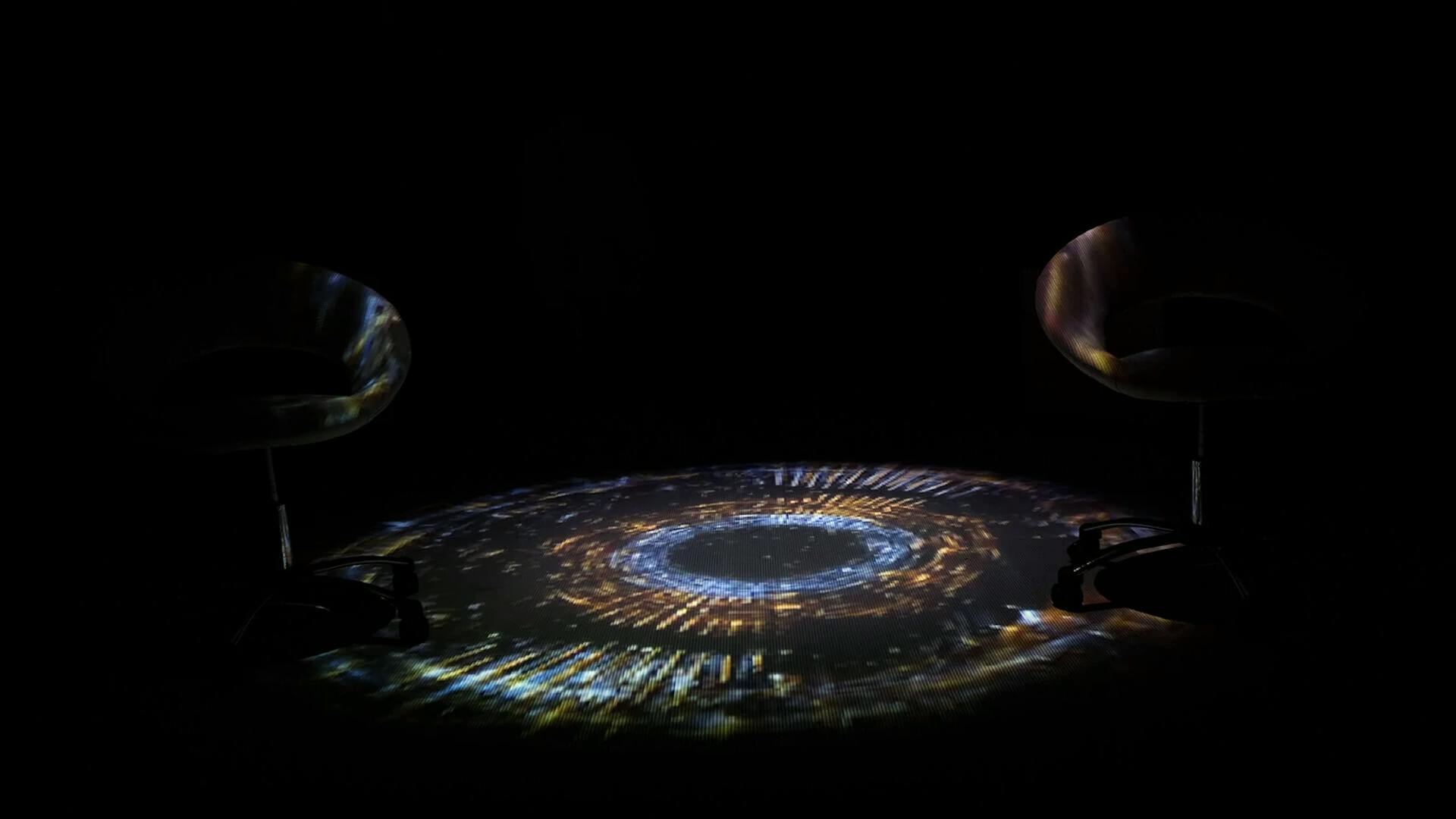
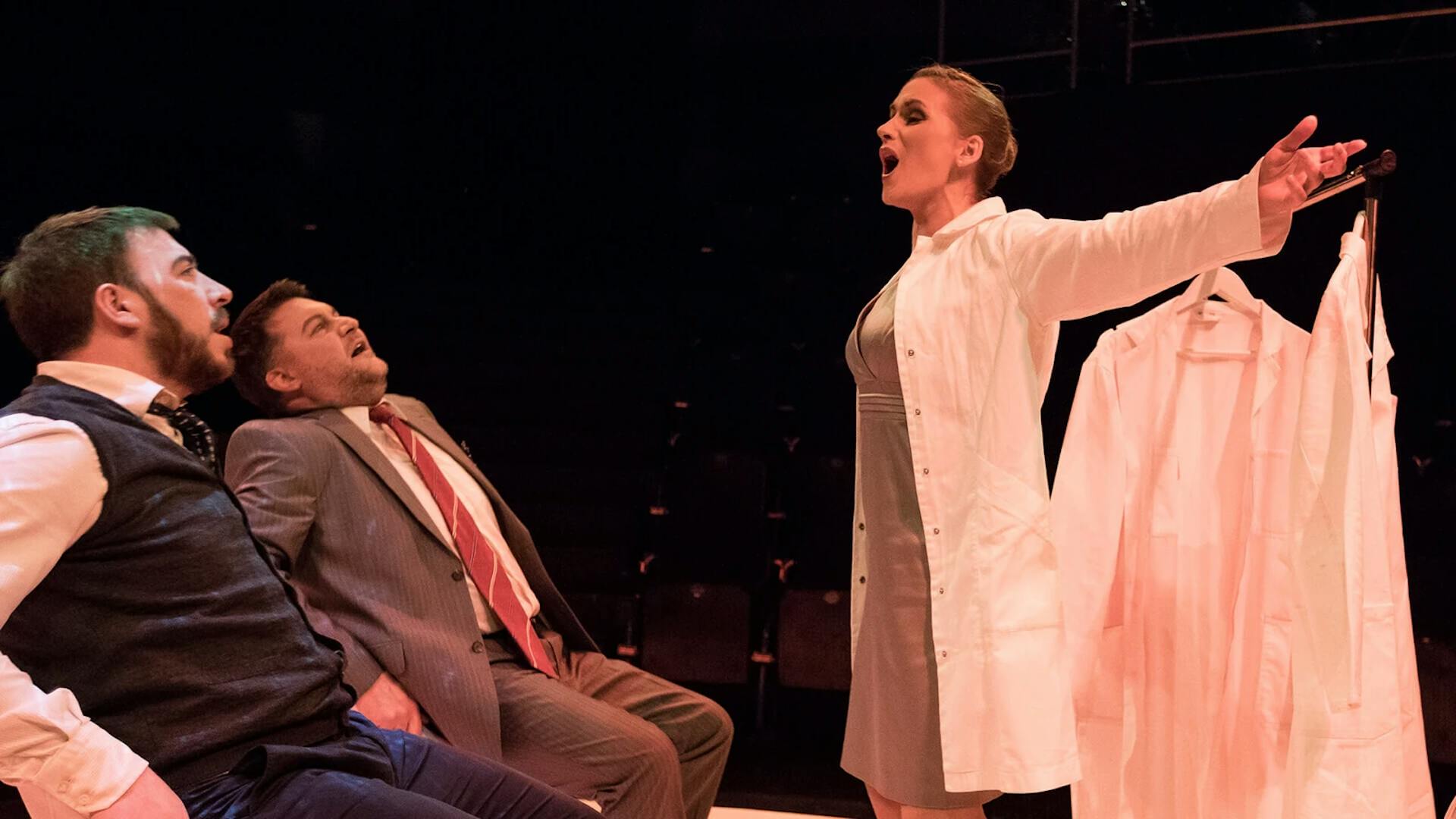
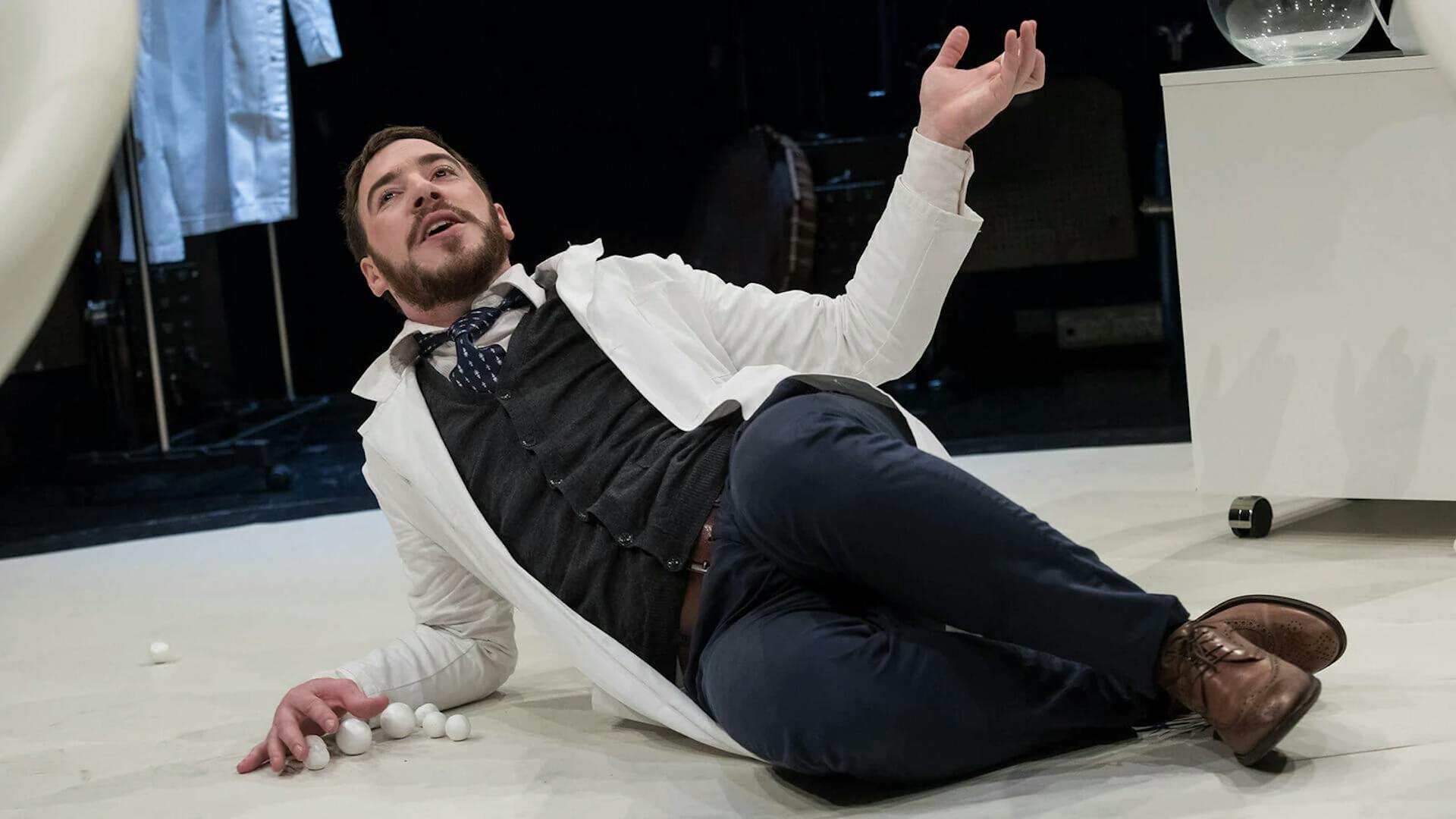
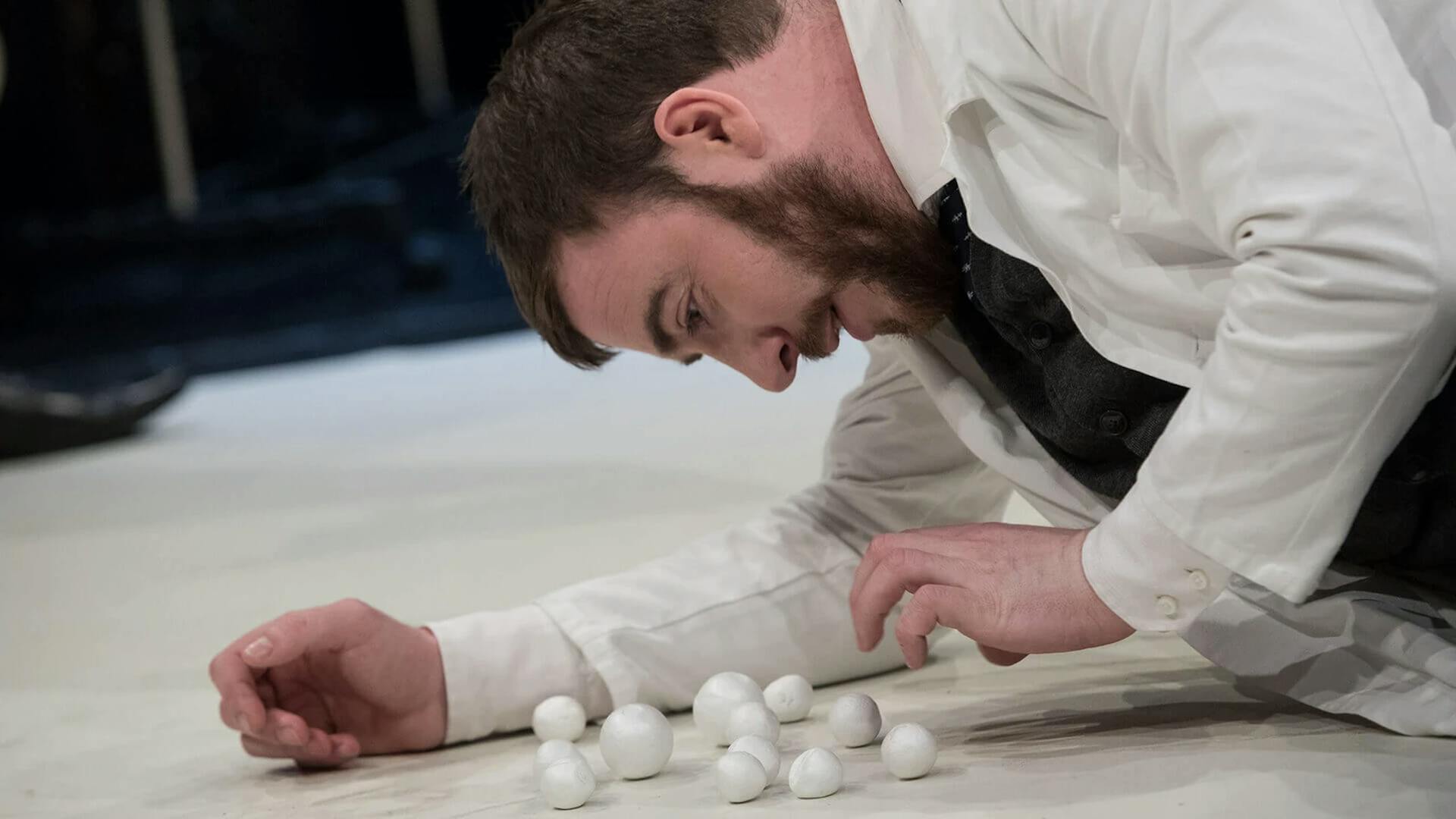
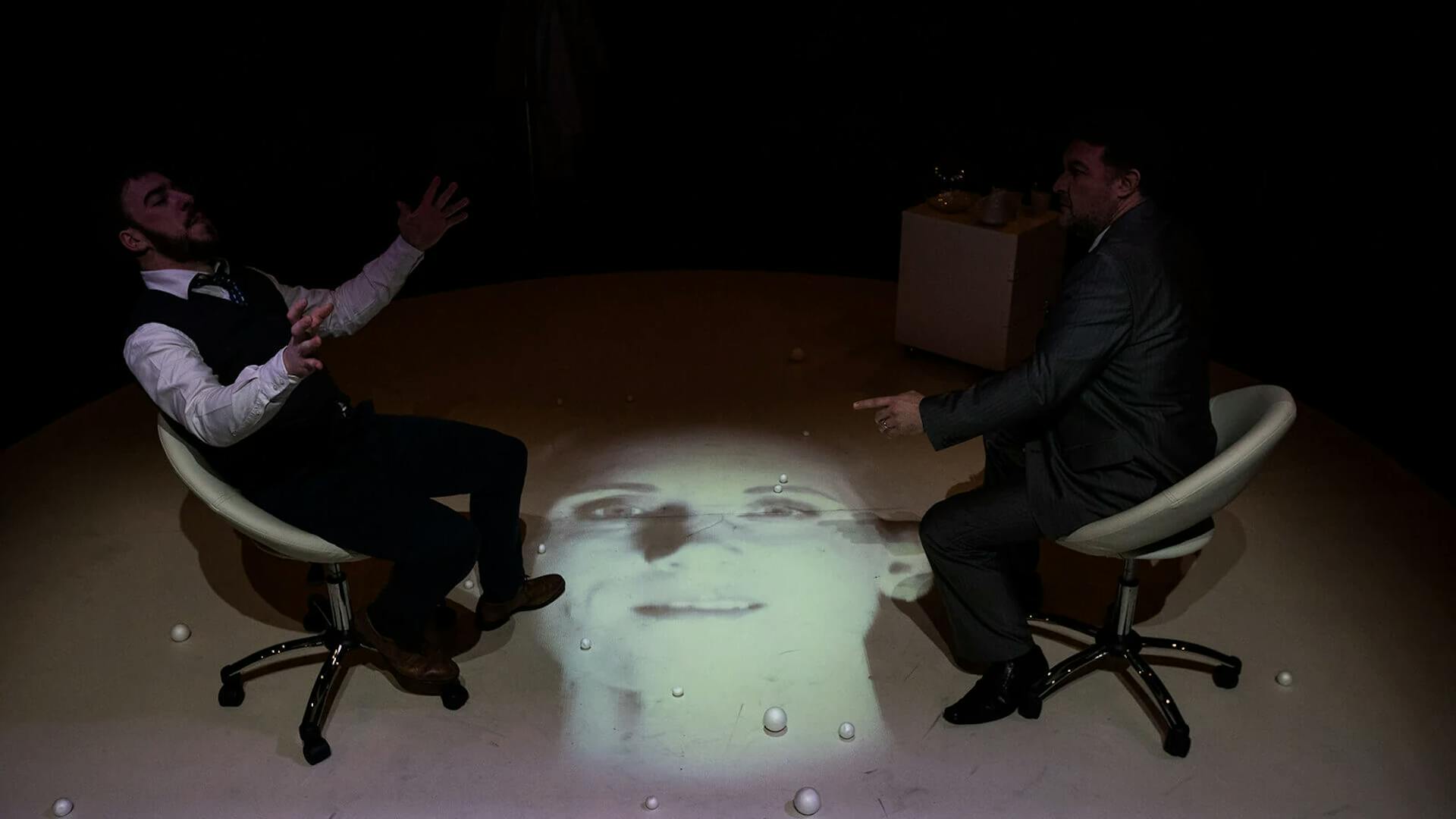
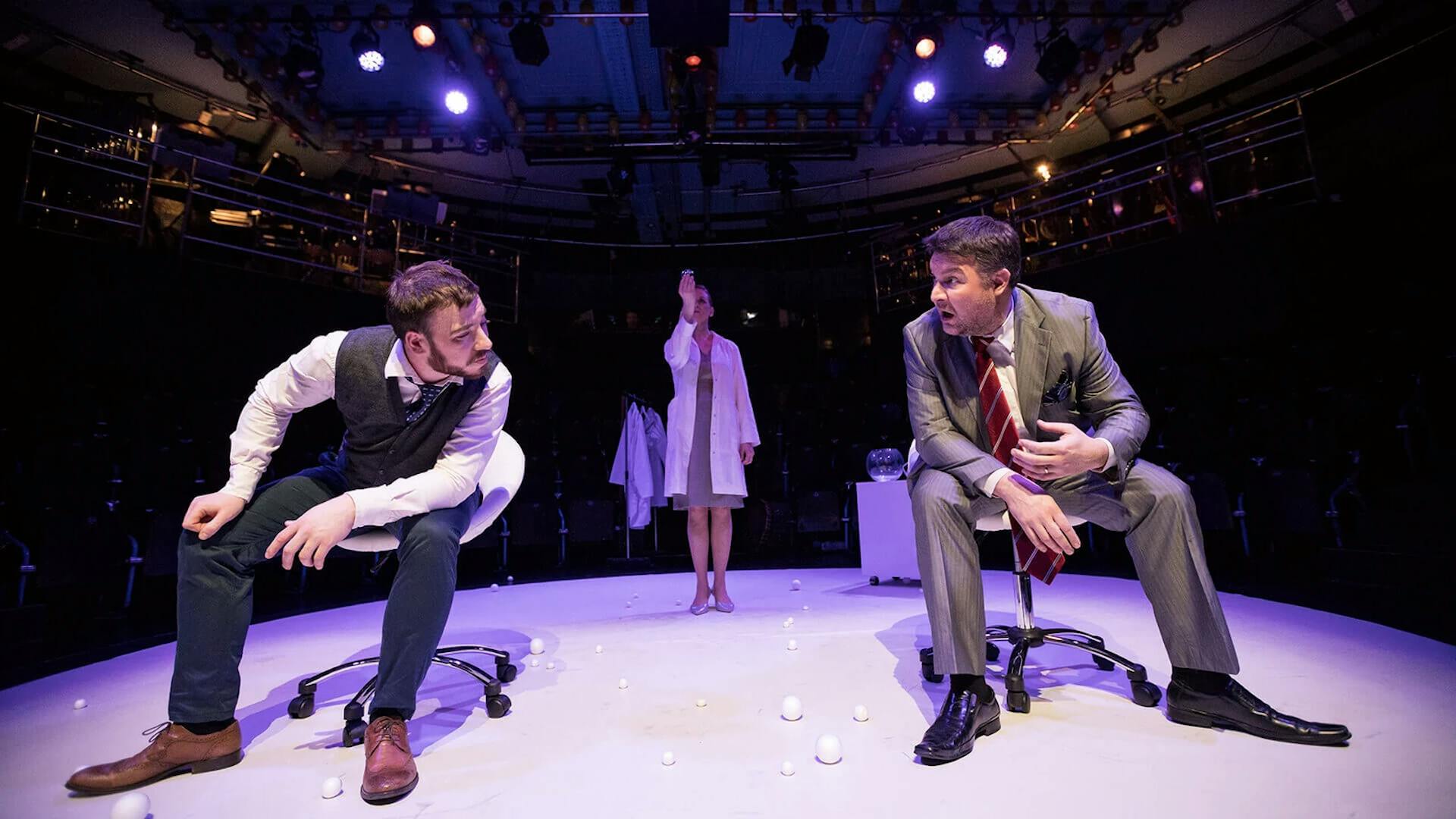
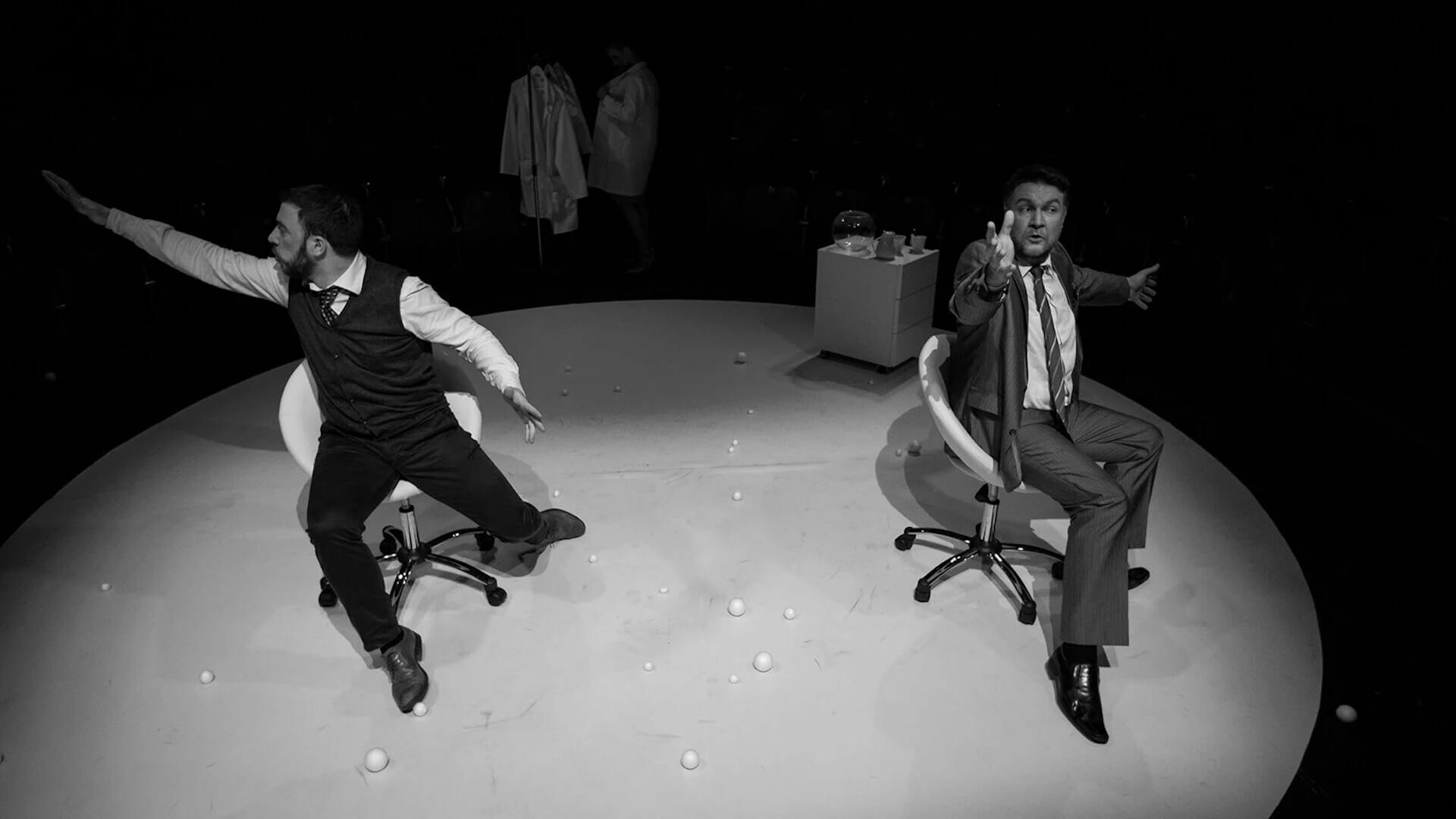
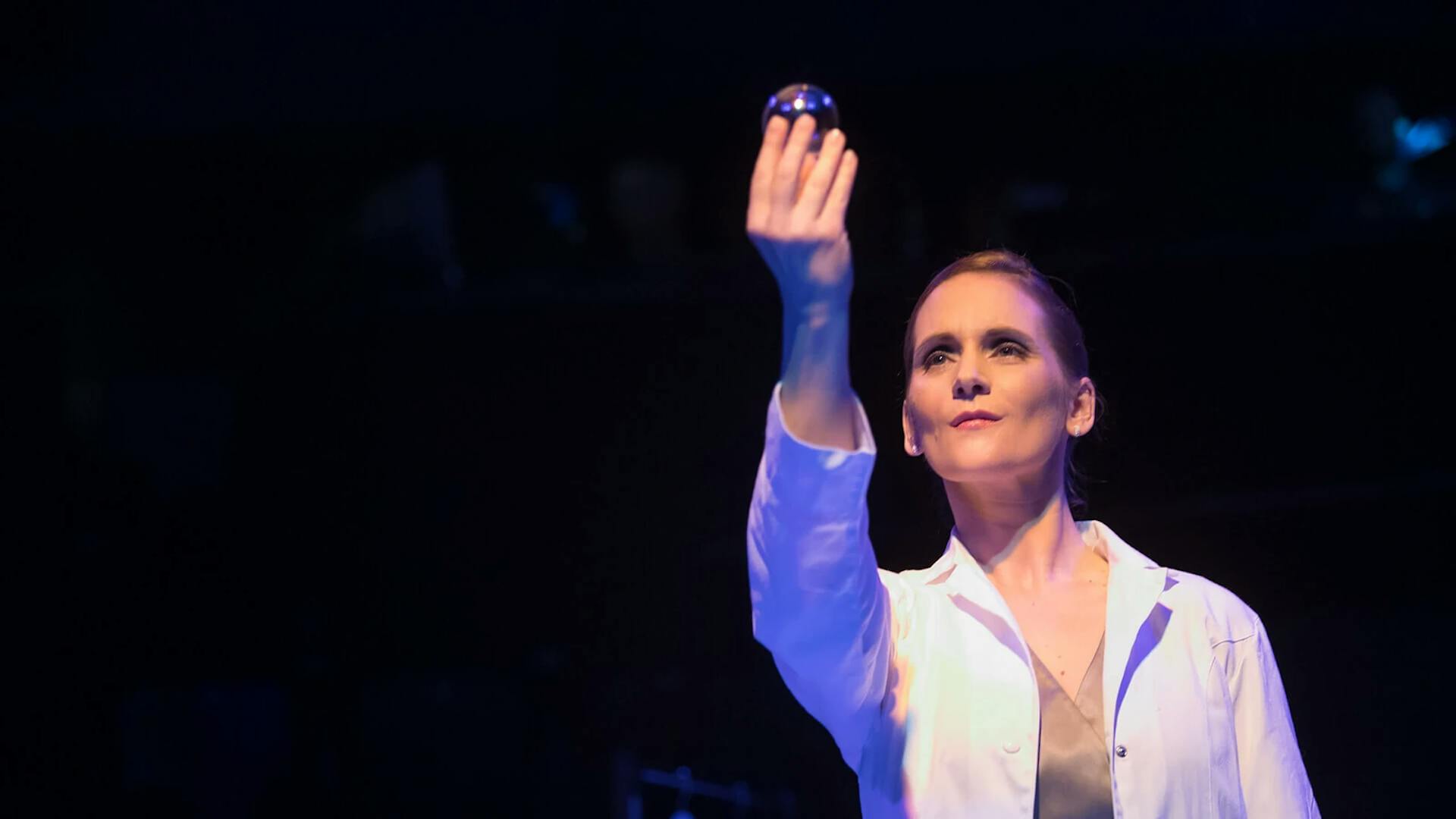
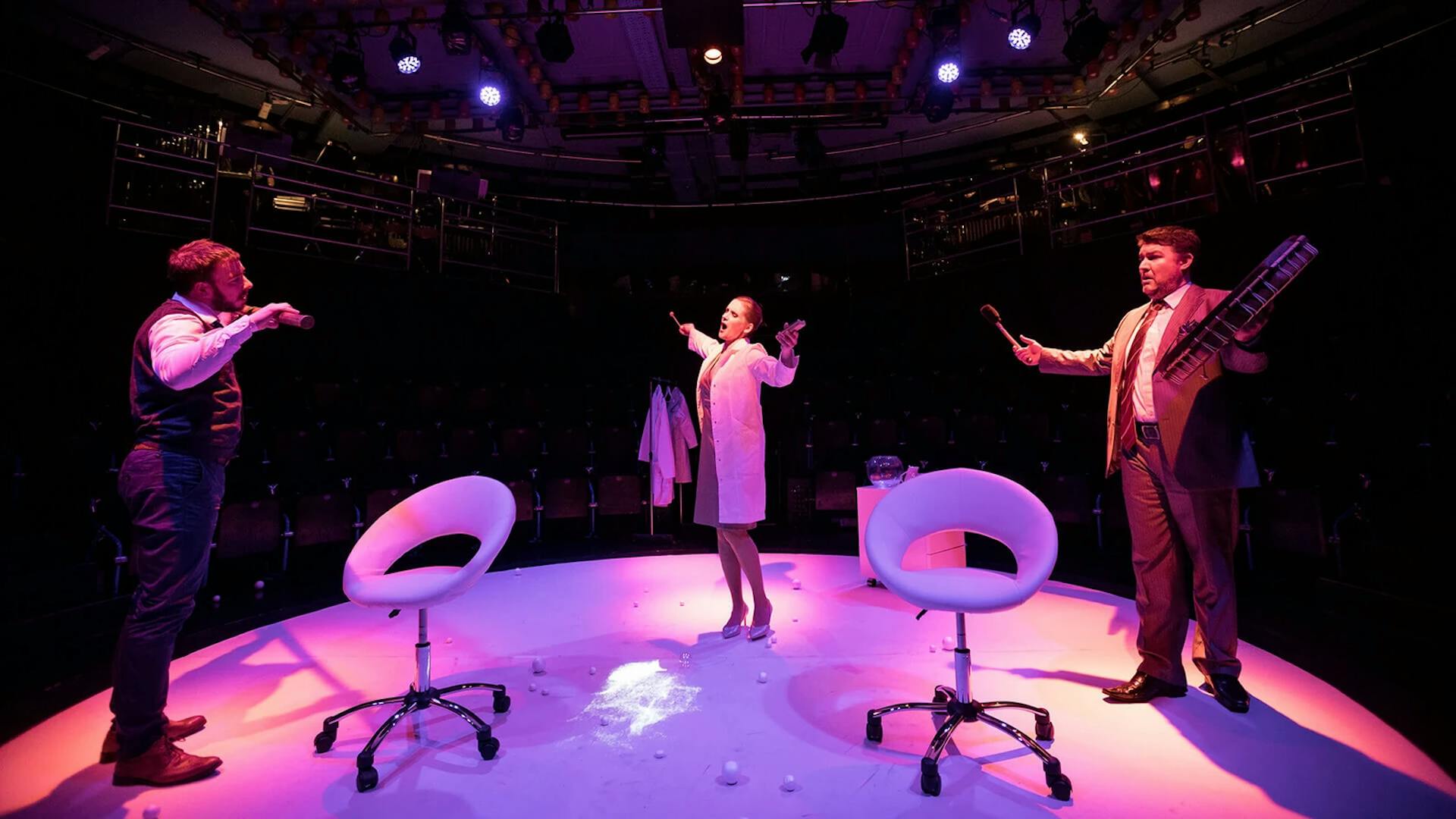
Co-production: Slovenian Chamber Music Theatre, Cankarjev dom Ljubljana and SToP – Slovenian Percussion Project in cooperation with UNICUM FestivalPremière: Cankarjev dom Ljubljana, February 21, 2017

Director: Eva Hribernik
Conductor: Jerica Gregorc Bukovec
Set and costume designer: Jaro Ješe
Producer: Katja Konvalinka
Photographer: Darja Štravs Tisu
From the directing concept:
“The protagonists of the operatic black comedy, Amon, an emeritus professor of physics, and Jose, a doctor of physics, are on their way to discovering the famous Higgs boson, often called the God Particle. The God Particle is an important piece of the mosaic that would allow a scientific understanding of the universe. The two physicists have mastered matter, but at the same time, they strive beyond its limits because they believe that there is something that cannot be perceived by the eyes alone. We live under the delusion that our lives are real and perfect, but we are at the same time still searching for answers to the questions of who we really are and what the meaning of our existence is. So is the God Particle the secret of intuition, which sees the whole and not just the individual particles? If science were to accept and confirm intuition, would this perhaps affect the scientific progress and spiritual growth of all humanity?”
From the review:
“The merits for the realisation of this masterful interweaving of words, music and drama also come from the effective scenography and lighting effects and projections designed by Jaro Ješe, as well as the forthright and refined direction of Eva Hribernik. They were connected into a whole and overseen by Jerica Bukovec Gregorc. The designers took advantage of the spatial features of the Štih Hall of Cankarjev dom, which could be an obstacle in itself, by focusing on the expressiveness and originality of the performance – the round hall additionally emphasised the symbolic connection with the circle/sphere, the particle and the cast amid the audience, which was thus additionally and equally involved in the action.” (Tomaž Gržeta, SIGIC, 25 February 2017)